

Linde Leblans
The Florist
Marte Wéry
Denmark
Dead Letter
Hugo Van Goethem
Stip 05
Albert Szukalski
zonder titel
Marc Verstockt
About us
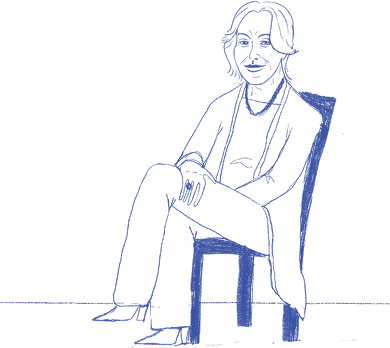
Frieda Gallery is an intimate, family-run art space where modern art is presented in a warm, homely setting with furniture, atmosphere and room for conversation. Founded by father and daughter, Danny and Emily, the gallery finds its heart in Frieda, the grandmother who continues to inspire as a quiet presence full of taste, wisdom and warmth.
The gallery showcases an eclectic mix of works by both established and emerging artists, mainly from the Belgian art scene. Each exhibition carries Frieda’s spirit and invites visitors to slow down, discover, and feel at home with art. We believe art should not feel distant or intimidating. At Frieda, it is something you can live with, learn from and connect to.
Artists

Linde Leblans
Self Portrait No.1
Linde is a self-taught artist who began painting with oil paints in 2020, as a creative outlet during lockdown. She learned painting by doing, embracing the freedom that comes from working from curiosity and intuition, without formal rules or constraints.
Her fascination for the medium stems from admiring classical oil painting in museums, particularly works by Rubens and Cara- vaggio, as well as from the influence of her great-grandfather, an oil painter whose pieces still hang in her family home. These works sparked a lasting connection to painting, rooted in both heritage and emotion.
In her paintings, Linde aims to capture the quiet beauty and subtle drama of everyday moments through folds, color, and light. By focusing on a fragment of a larger scene, she highlights the details that draw her in, while leaving space for the viewer to imagine what lies beyond the frame. What’s left unseen is just as important as what’s revealed. She intentionally avoids showing faces not to obscure identity, but to suggest universality. These images are not about a specific person or a particular jacket, but about the over- looked beauty in small, ordinary details found everywhere, often in unexpected places.
-
Sold
Self Portrait No.2
-
The Critic
-
Sold
The Florist
-
The Observer
-
The Regular
-
Sold
The Spectator

CERAMI by Annekien
Annekien discovered clay in the spring of 2022 and never let go. What began on the potter’s wheel gradually shifted toward
handbuilding. For her, there is nothing like the feeling of clay in her hands: grounded with endless possibilities within reach.
Her totems emerge layer by layer, just as life itself unfolds in parts and phases. They are a reflection of the many roles and seasons that shape a life — the bonds we form, the shifts we undergo, the moments that leave their mark. Each element speaks for itself, but the strength lies in the whole.
Balancing intention and intuition, Annekien allows her sculptures to find their shape somewhere between thought and play. She invites viewers to slow down and sense the quiet power of a piece that draws attention without ever raising its voice.

Paul Van Hoeydonck
Sans Titre
Paul Van Hoeydonck was a visionary artist whose multidisciplinary practice spans painting, sculpture, and installation, often
centered around themes of space, technology, and the future of humanity. Trained in art history and archaeology, Van Hoeydonck emerged in the post-war European avant-garde, engaging with movements such as Constructivism and Futurism while forging a unique artistic language shaped by the optimism and anxieties of the space age.
Van Hoeydonck is internationally renowned for his iconic work Fallen Astronaut (1971), a small aluminum sculpture placed on the surface of the Moon by the Apollo 15 mission. Conceived as a tribute to astronauts and cosmonauts who lost their lives in the pursuit of space exploration, the piece remains the only human-made sculpture on the lunar surface — a powerful gesture of art in the vastness of space. While the work sparked controversy regarding its interpretation and commercialization, it endures as a poignant intersection of art, science, and memorial.
Throughout his career, Van Hoeydonck has maintained a fascination with the relationship between humans and machines, the aesthetics of space exploration, and the utopian dreams of the 20th century. His works often incorporate industrial materials, geometric abstraction, and symbolic references to cosmic environments, suggesting both the isolation and possibility of humanity’s expansion beyond Earth.
Paul Van Hoeydonck’s work has been exhibited internationally and forms part of major public and private collections. His legacy continues to resonate in contemporary dialogues around art, technology, and our shared cosmic future.

Marcel Mariën
België
A Belgian artist, writer, and photographer, Marcel Mariën is best known for his provocative contributions to Surrealism (a movement in the 1900s that tried to show the world of dreams and the unconscious mind, often by mixing strange and unexpected images together). He used smart, often humorous or ironic remarks and works to question traditional views about art and society. Born in Antwerp in 1920, Mariën became closely associated with the Belgian Surrealist movement, working alongside René Magritte and Paul Nougé. This circle of avant-garde artists pushed the boundaries of art through playful, radical, and often subversive approaches that blurred the line between reality and imagination.
Mariën gained recognition for his unconventional use of collage, assemblage, and altered objects, transforming everyday
materials into works charged with irony and critique. His art often carried a humorous or satirical edge, reflecting his resistance to authority and his desire to expose the absurdities of modern life. Beyond visual art, he was also a writer and publisher, producing essays, poetry, and manifestos that further expanded the Surrealist dialogue in Belgium and beyond.
Among his most striking works are assemblages in which he recontextualized ordinary objects, creating surreal encounters that invite viewers to question accepted truths and confront hidden desires. His practice consistently merged intellectual rigor with playful provocation, making him one of the most original voices in post-war European art.
Marcel Mariën’s legacy lies in his fearless exploration of the surreal and the subversive, leaving behind a body of work that
continues to challenge, unsettle, and inspire reflection on the deeper workings of art, society, and the imagination.
-
Kaarten

Hugo Van Goethem
Strip 05
A Belgian painter, Hugo Van Goethem is best known for his exploration of movement as a central theme in his work. His artistic journey took a decisive turn in 1996, when he was invited to create a live series of paintings on stage at the Flemish Opera in Antwerp and Ghent, accompanying a performance of contemporary classical music by German composer Wolfgang Rihm. The experience revealed to him the difficulty of giving sound a visual form. Unlike the action painters who often sought to capture an emotional state inspired by music, Van Goethem realized that sound itself resists direct translation into paint. By the time the painter reaches for his materials, the tones have already faded, replaced by new ones.
Determined to stay ahead of sound rather than follow it, Van Goethem began developing a new visual “notation” to grasp what he called the fleeting essence of sound. The experiment led to Landscapes, a series that transforms shifting visual impressions of travel through nature into painted records of movement.
A third line of development in his work is found in the series Comic Figures. At first glance they may appear playful or whimsical, but for Van Goethem they are also about movement—capturing. What happens between two frames of a narrative sequence. In this way, they form a synthesis between his earlier explorations of sound
and his later meditations on landscape.
Hugo Van Goethem’s practice thus bridges performance, abstraction, and figuration, always circling back to the question
of how movement—whether of sound, vision, or story—can be captured and transformed into painting.
-
Sold
Strip 15

Denmark
Dead Letter
a Belgian conceptual artist (a movement of the 1960s and 1970s in which the idea or concept behind the work became more important than the physical artwork itself) known for his unique approach to art that critiques consumer culture, mass production, and the role of art in society. He adopted the name “Denmark” in 1974 as an artistic pseudonym, symbolizing his desire to create a new identity that distanced him from traditional notions of the artist and the art market.
Denmark’s work is characterized by his large-scale installations and assemblages made from discarded objects, books, magazines, and other mass-produced items, which he meticulously organizes, catalogues, and archives. His art often comments on the overwhelming presence of information, media, and consumer goods in contemporary life, reflecting on themes of waste, overconsumption, and the impermanence of knowledge.
Throughout his career, Denmark has exhibited widely in Europe and beyond, gaining recognition for his distinctive artistic language that merges environmental concerns with a critical eye on modern society. His works are held in several public and private collections, where they continue to provoke thought on the nature of material culture and the boundaries between art, archiving, and activism.
Denmark’s art remains influential for its bold critique of the throwaway culture of the modern world, and he is celebrated for
turning ordinary discarded materials into profound visual meditations on time, memory, and human behaviour.

INAN LAU
Inan Lau is a visual artist whose work explores themes of memory, identity, diaspora, and history (more recently, the collective idea on perception). He works with various media, including drawing, objects, installation, video, and photography. Depending on the subject matter, some works are destroyed after completion, while others are collected.

Eduard Van Giel
Moonlightening
Eduard van Giel was a Belgian postwar and contemporary artist, born in 1945. Based in Antwerp, he developed a distinctive and bold artistic language that blended neon lighting, mixed media, and conceptual nods to pop culture and modern art influences.
Primarily recognized for his light sculptures, van Giel often combined lucite, UV neon tubing, and painted elements to create electrifying visual statements. A notable example is “A Multicolored Dollar in the Wall Street Movement” (1989) — part of his Black Nights Series and crafted in homage to Andy Warhol. This one-of-a-kind piece enclosed fluorescent-painted dollar symbols in lucite, integrated with audio components like a cassette player and speakers, inviting viewers to both see and hear the art.

Albert Szukalski
Zonder titel
Polish-born Belgian artist best known for his serie sculptures and installations that often featured ghostly, shrouded figures. Born in Furth im Wald, Germany, Szukalski moved to Belgium, where he became associated with the avant-garde art scene. This refers to the community of artists, movements, and works that are experimental, radical, or innovative, often challenging traditional ideas about art and culture.He gained recognition for his unconventional use of materials, including polyester and other industrial substances, to create haunting, life-sized figures that appear both solid and ethereal.
Szukalski is most famous for his work in the Nevada desert, where he created “The Last Supper” (1984), a haunting installation featuring ghostly, shrouded figures resembling the apostles from Leonardo da Vinci’s iconic painting. This work, made of fiberglass shrouds draped over living models, is part of the Goldwell Open Air Museum near Rhyolite, Nevada, and remains a striking example of land art that merges the desolate landscape with spiritual and existential themes.
Albert Szukalski’s works are admired for their emotional depth and their unique blend of surrealism and place, leaving a lasting legacy that invites viewers to reflect on the temporary nature of life.
-
Fight
-
Waiting for Caviar

Jan Fabre
Often I feel betrayed
a Belgian multidisciplinary artist known for his provocative works in performance, theater, sculpture, and visual arts. Born in Antwerp, Fabre studied at the Municipal Institute of Decorative Arts and the Royal Academy of Fine Arts in Antwerp. His early career was marked by experimental drawings and performances that blurred the boundaries between art and life, often incorporating elements of self-discipline, endurance, and the human body.
Fabre’s art is characterized by its exploration of transformation, metamorphosis, and the tension between life and death. He
often uses unconventional materials, such as blood, beetle wings, and bones, to create intricate sculptures and installations. His series of drawings made with Bic ballpoint pen ink and large-scale mosaics composed of jewel beetle wing cases are particularly celebrated for their meticulous detail and vibrant color.
Jan Fabre remains one of the most complex and challenging figures in contemporary art.

Marthe Wéry
Marthe Wéry was a Belgian abstract painter, printmaker, and installation artist whose work is celebrated for its quiet intensity and refined exploration of color, light, and surface. Born in Brussels, she studied at the Académie Royale des Beaux-Arts in the early 1950s, where she was shaped by the principles of geometric abstraction and the emerging language of minimalism.
Rather than adhering to strict formalism (a movement where the focus is on the formal elements of a work of art – such as color, line, shape, composition, rhythm, and texture – rather than on subject matter, meaning, or context) Wéry approached abstraction as a deeply personal and tactile experience. Her paintings and installations often composed of subtle grids, monochromatic planes, and rhythmic sequences invite close observation. What first appears minimal reveals, upon longer viewing, a complex interplay of texture, luminosity, and repetition. For Wéry, color was never static; it shifted with the light, the angle of the viewer, and the mood of the space.
Her work stood apart in its quiet radicalism. While rooted in abstraction, it resisted categorization, bridging painting, sculpture, and architectural space. In the 1980s and ’90s, she created large-scale installations that blurred the boundaries between the artwork and its surroundings, encouraging viewers to engage both physically and emotionally.
Wéry exhibited extensively throughout Europe. She represented Belgium at the Venice Biennale in 1982, held a solo exhibition at the Musée d’Art Moderne de la Ville de Paris in 1983, and participated in Documenta 9 in Kassel in 1992 an affirmation of her significance in the international art world. Yet despite this recognition, her work retained an introspective, almost meditative presence, untouched by spectacle or grand gesture.
Marthe Wéry’s legacy lies in her ability to create spaces for stillness and reflection within the visual field. Through the restrained vocabulary of lines, layers, and color fields, she revealed how abstraction could evoke feeling, subtle, profound, and enduring. Her work continues to resonate with contemporary audiences, offering a contemplative counterpoint to the noise of the modern world.

Marc Verstockt
Mark Verstockt (1930–2014) was a Belgian postwar and contemporary artist who left a profound mark on the European avant-garde. Born in Lokeren, he developed an artistic practice that constantly questioned how art, architecture, and communication intersect. Moving seamlessly between painting, sculpture, video, installation, and print, Verstockt refused to be confined by a single medium. Instead, he sought to strip forms down to their most essential structure: grids, letters, lines, and volumes to uncover the universal language underlying visual culture.
From the 1960s onward, Verstockt emerged as a leading figure of geometric and conceptual abstraction in Belgium. His works reveal both an intellectual rigor and a radical sense of experimentation, situating him among the key voices of the postwar avant-garde. He was one of the earliest Belgian artists to embrace video art and computer graphics, using technology not just as a tool but as an integral artistic medium.
Equally significant were his monumental projects that merged art with public space and architecture. Through these works,
Verstockt sought to democratize art, making it part of everyday life rather than an isolated object in a gallery. His legacy is one of innovation and impact, an artist who expanded the vocabulary of contemporary art and opened new paths for integrating technology, language, and form into visual expression.
-
Sold

Ben Vautier
Je me sens seul
Ben Vautier is a French artist of Swiss descent, widely recognized for his text-based works, performances, and his central role in the Fluxus movement (a movement that sought to break down conventional notions of art, rejecting elitism and embracing a playful, irreverent approach). His work is marked by a rebellious spirit—playful, provocative, and often confrontational consistently questioning ideas of authorship, originality, and the role of the artist.
At the core of Ben’s practice is language. His signature hand-written text pieces found on canvases, objects, and even in public spaces combine irony, humor, and philosophy to explore social, cultural, and deeply personal themes. With phrases like “L’art est inutile. Rentrez chez vous” (“Art is useless. Go home”), Ben challenges the art world head-on, pushing against its institutions and conventions.
As a prominent figure in Fluxus Ben found a natural home for his ideas. He collaborated with like-minded artists such as George Maciunas and Yoko Ono, participating in happenings, mail art, and experimental performances that blurred the line between art and everyday life.
A self-made artist in many ways, Ben transformed his modest shop in Nice into a living artwork its facade covered in bold statements and slogans turning it into both a personal canvas and a social space for artists. His practice was never about decoration or tradition; it was about questioning everything.
Ben’s influence lies not only in his visual language but in the way his art invites reflection—on meaning, systems, and the viewer’s own role in completing the work. He never sought to provide answers, only to provoke questions. Today, his works continue to be exhibited internationally, a testament to his enduring impact on conceptual art and the radical potential of simplicity.
Pop up expo
18 — 21 september 2025
Wolstraat 34,
2000 Antwerpen
- Linde leblans
- Marthe Wéry
- Jan Fabre
- Linde leblans
- Albert Szukalski
- Ben Vautier
- inan lau
- Denmark
- Marc Verstockt
- Marcel mariën
- eduard van giel
- paul van hoeydonck
- cerami by annekien
- hugo van goethem